

The Article
Do you spend most of your day staring at a computer screen, scrolling on your phone, or watching television for long hours? If your daily routine involves anything that strains your eyes, this article is meant especially for you. We often say that we protect something “like our eyes,” meaning with great care. Yet, when we truly look at our habits, we realize that we no longer protect our eyes with that level of care. Instead, we do the bare minimum, slowly damaging one of the most valuable gifts we have—our vision.
In today’s screen-focused lifestyle, eye strain has become extremely common. Tired eyes, dryness, discomfort, and reduced focus are signs that our eyes are overworked. To maintain healthy vision without letting eye strain take over, it is essential not only to rest the eyes but also to give them proper exercise. Simple eye exercises can quickly reduce fatigue and bring a sense of relief and comfort to the eyes.
Before moving into the exercises, it is worth mentioning the Brain Booster Mug, a product designed to awaken the excellence within you. The first stock has already been sold out, and the next stock will be released on November 15. Reserving it in advance ensures you don’t miss out, and full details are shared at the end of the article.
The first exercise focuses on eye rotation. Sit or stand comfortably with your neck and shoulders relaxed, keeping your head straight. Slowly move your eyes to the left, then upward, to the right, and downward in a smooth circular motion. Perform this movement five times clockwise and five times counterclockwise. If possible, repeat the entire cycle three times. This exercise helps reduce eye tension, improves moisture in the eyes, and eases stiffness caused by prolonged screen exposure.

The second exercise involves straight eye movement. Sit comfortably and look straight ahead without moving your neck. Move only your eyes upward, then downward, repeating this movement ten times. After that, without turning your head, move your eyes as far left and right as possible, again ten times. This exercise gives the eye muscles proper movement and helps maintain sharp and stable vision.
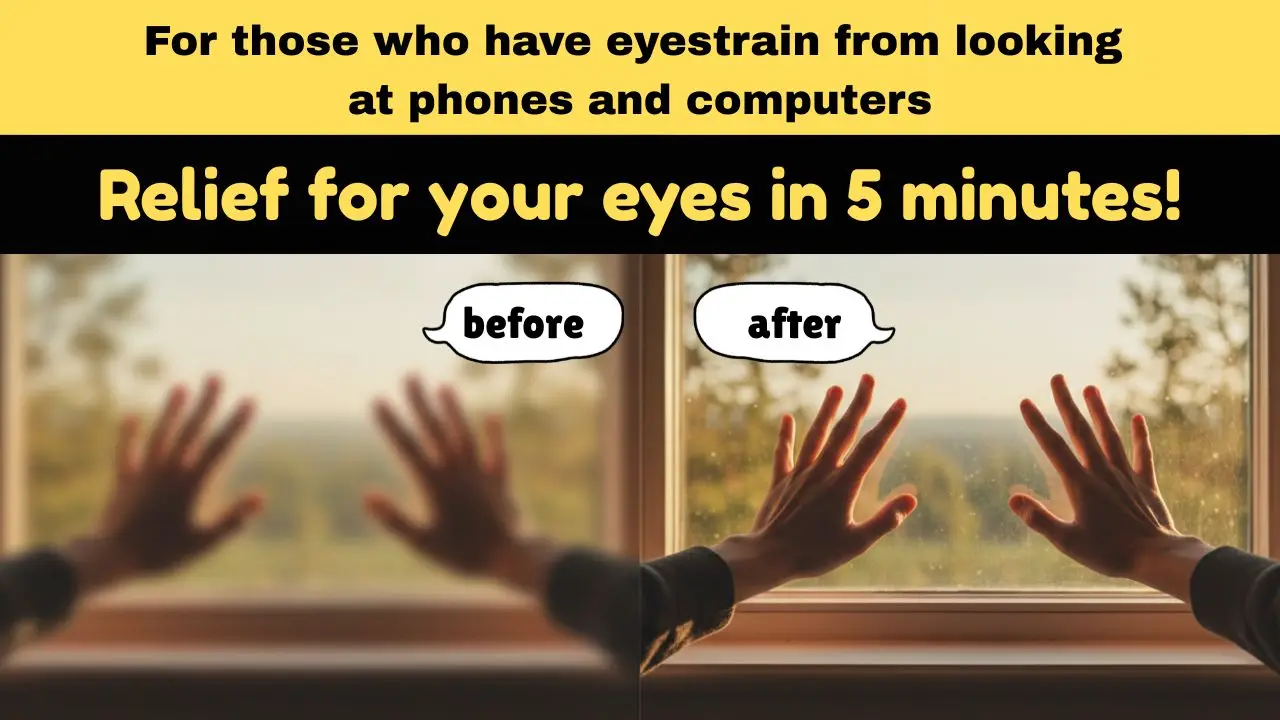
The third exercise is known as focus shifting, and it is one of the most important eye exercises. It should ideally be practiced daily or at least every other day. Sit near a window or in a comfortable space and extend your right arm forward. Focus on the tip of your thumb for two seconds. Without moving your hand, shift your focus to a distant object, such as a tree or building outside, for two seconds. Then return your focus to your thumb for another two seconds. Repeat this cycle ten times. This exercise strengthens the eye’s ability to switch focus smoothly between near and distant objects.
The fourth exercise is palm covering, a deeply calming method that gives the eyes complete rest from light stimulation. Wash your hands and dry them well, then rub your palms together until they feel warm. Rest your elbows on a table and gently cover your closed eyes with your warm palms, ensuring no light enters. Breathe deeply and relax for about five minutes, allowing the tension and fatigue in your eyes to fade away. This exercise is especially beneficial for those who spend long hours in front of screens, as it leaves the eyes feeling light, calm, and refreshed.
In addition to exercises, following the 20-20-20 rule is essential for long-term eye health. This rule helps reduce eye strain caused by continuous screen use. If you work on a laptop, desktop, phone, or watch television frequently, every 20 minutes you should look away from the screen and focus on an object about 20 feet away for 20 seconds. Practicing this regularly helps prevent excessive eye fatigue and keeps your eyes healthier throughout the day.
Spending the entire day glued to screens without caring for your eyes will eventually take its toll, and the consequences will be yours alone to bear. Protect your eyes as you would protect something precious. Use your intelligence wisely, care for your vision, and make eye health a daily priority.

Essential Points to Remember
• Prolonged screen use causes eye strain and discomfort
• Simple eye exercises can quickly reduce eye fatigue
• Eye rotation improves flexibility and moisture
• Straight eye movement strengthens eye muscles
• Focus shifting enhances near-to-far vision adjustment
• Palm covering deeply relaxes and refreshes the eyes
• The 20-20-20 rule is crucial for preventing long-term eye strain
In-Depth Explanation of the Article
This article focuses on a modern health issue that almost everyone experiences but rarely takes seriously: eye strain caused by excessive screen usage. In today’s digital lifestyle, people spend long hours in front of computers, smartphones, and televisions, often without realizing the long-term impact on their eyesight. The article highlights how people commonly say they protect something “like their eyes,” yet in reality, they neglect proper eye care. By addressing this contradiction, the article creates awareness and encourages readers to rethink how they treat their vision.
The main strength of the article lies in its practical approach. Instead of overwhelming readers with medical terms or complex theories, it introduces simple eye exercises and habits that anyone can practice at home or at work. These exercises are designed to relax the eye muscles, reduce fatigue, and support better focus and clarity. The article also emphasizes consistency, explaining that eye care is not a one-time action but a daily responsibility.
Another important aspect of the article is its educational value. Many people assume that eye problems only occur due to age or genetics, but the article clearly explains that daily habits play a major role. Prolonged staring at screens reduces blinking, dries the eyes, and overworks the eye muscles. By explaining these effects indirectly through exercises and routines, the article helps readers understand the cause of eye strain without sounding technical or intimidating.

Pros of the Ideas Presented in the Article
One major advantage of the article is that the solutions it provides are natural and cost-free. The eye exercises do not require special equipment, medication, or professional supervision. Anyone can practice them anywhere, making them highly accessible. Another positive aspect is that the exercises are quick and easy to perform, which increases the likelihood that readers will actually follow them.
The article also promotes prevention rather than treatment. By encouraging readers to take breaks, relax their eyes, and follow the 20-20-20 rule, it helps reduce the risk of long-term vision problems. This preventive approach is far more effective and practical than waiting for symptoms to worsen. Additionally, the article supports mental relaxation along with physical eye health, especially through calming practices like palm covering and deep breathing.
Cons and Limitations of the Article
While the article provides excellent basic guidance, one limitation is that it may not fully address individuals with existing medical eye conditions. People with serious vision problems, chronic eye diseases, or severe headaches may require professional medical advice beyond these exercises. Another limitation is that results depend heavily on consistency. If readers practice the exercises irregularly or ignore the 20-20-20 rule, they may not experience noticeable improvements.
The article also does not deeply explore environmental factors such as lighting conditions, screen brightness, or posture, which can also contribute to eye strain. However, this omission does not reduce the overall value of the article; it simply means that the content focuses on core habits rather than covering every possible factor.
Practical Examples Readers Can Take from the Article
A clear example from the article is someone who works on a computer for eight hours a day. By practicing eye rotation and straight eye movements during short breaks, they can reduce stiffness and dryness in their eyes. Another example is a student who spends long hours studying on a tablet or phone. Using the focus-shifting exercise near a window helps their eyes adjust between near and distant vision, improving comfort and concentration.
For people who experience heavy eye fatigue in the evening, palm covering can be used as a relaxation ritual before bedtime. This not only calms the eyes but also helps reduce mental stress accumulated throughout the day. The 20-20-20 rule can be applied by office workers, gamers, and even television viewers, making it one of the most versatile and practical habits introduced in the article.

Conclusion
The article successfully communicates an important message: eye health should never be taken lightly. Vision loss and eye discomfort often develop gradually, making them easy to ignore until they become serious. By encouraging simple daily practices, the article empowers readers to take control of their eye health before problems arise.
It reinforces the idea that caring for the eyes does not require drastic lifestyle changes, but rather small, consistent actions. These habits, when practiced regularly, can significantly improve comfort, focus, and long-term eye well-being.
Final Message
The final message of the article is clear and powerful: your eyes are one of your most valuable assets, and neglecting them will only lead to consequences you must face yourself. In a world dominated by screens, protecting your vision requires awareness, discipline, and simple daily care. By practicing these eye exercises and following healthy screen habits, you can preserve your eyesight, reduce strain, and enjoy clearer, more comfortable vision for years to come.