
Ukraine’s Drone Defense Revolution
Four years ago, Ukraine was a country that asked the world for weapons, missiles, and air defense systems. But by March 2026, the same country had become a sought-after partner, providing defense advice to even the world’s richest and most powerless countries. The reason for that is clear. Russia has been using Iranian-made Shahed drones in large numbers for years, and Ukraine is now the world’s leading country to learn how to respond to them cheaply, quickly, and on a large scale. President Volodymyr Zelensky said that 11 countries, including the United States, Gulf states, and countries in Europe, have asked Ukraine for assistance. Reuters reported that Ukrainian teams have been sent to Jordan, Qatar, the United Arab Emirates, and Saudi Arabia.
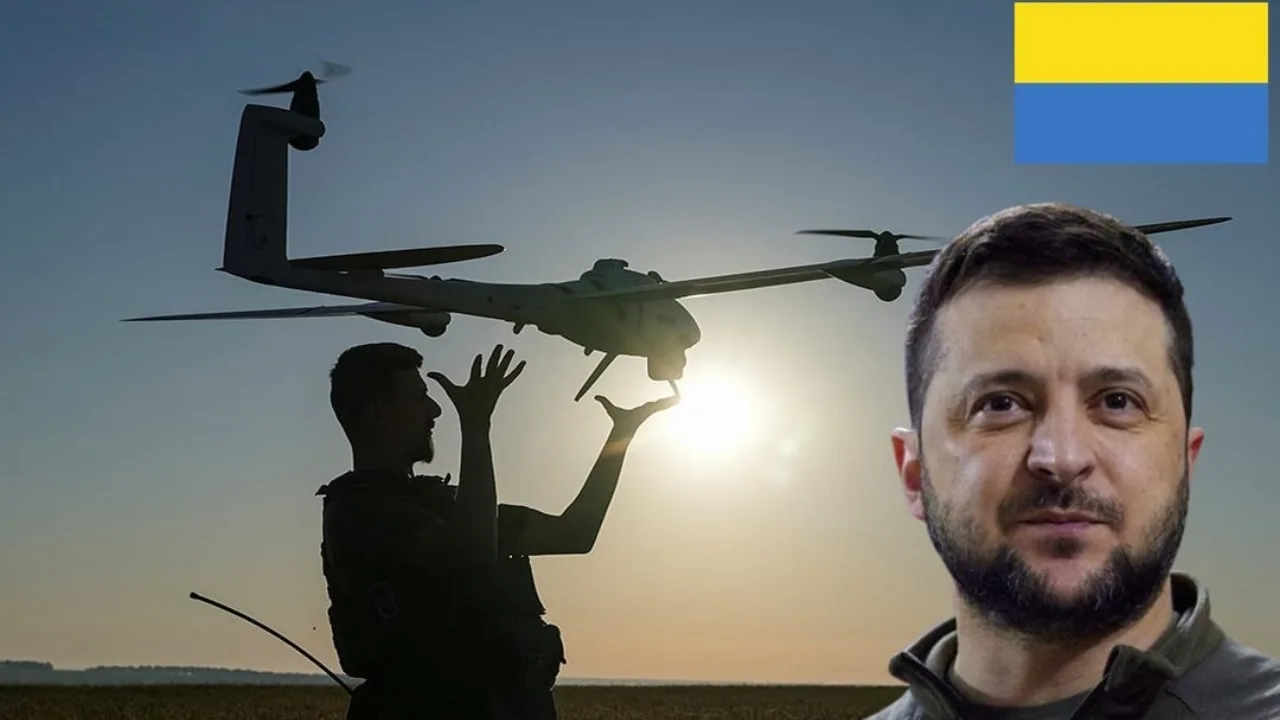
Iran’s Shahed drones are cheap, easy to use, and can be deployed in large numbers. Systems like the American Patriot or THAAD could be used to intercept them, but that would be too expensive. According to Al Jazeera, a Patriot missile costs about $4 million. And the supply of such missiles is limited. In comparison, Ukraine’s solution is simple but cost-effective. To intercept a cheap drone, it uses an even cheaper, faster drone. According to Al Jazeera, Ukrainian-made interceptor drones typically cost between $1,000 and $2,000, and are produced in the thousands per month. The quadcopter interceptor, called the Sting, can fly at speeds of 315 to 343 kilometers per hour, and Ukraine has also developed other designs, such as the Bullet, P1-Sun, Octopus 100, and ODIN Win_Hit.
Ukraine’s success is now drawing global attention because it is backed up by statistics. Al Jazeera noted that a New York Times analysis found that in February 2026, Russia had sent about 5,000 drones to Ukraine, 87 percent of which were destroyed by Ukraine. Other reports said that in January 2026 alone, 1,704 Shahed drones were shot down, 70 percent of which were destroyed by FPV interceptor drones.
Against this backdrop, wealthy Gulf countries are now turning their attention to Ukraine. Qatar and the United States are discussing Ukrainian interceptor drones, and Zelensky has also said that his country is ready to provide advice and technical assistance to Middle Eastern countries. The United Arab Emirates has reportedly asked for 5,000 drone interceptors, while Qatar has expressed interest in 2,000; Kuwait is also said to be in talks to buy. These figures have not yet been confirmed as official government contracts, but they illustrate how high demand has risen.
A country that fought for its survival has become a model for other countries to follow. To a world that believed in expensive solutions, Ukraine is now teaching that the new era of security is about cheap technology.
The lesson here is also very important for Sri Lanka. Even without a big budget, developed country status or large arsenals, Ukraine has shown that when necessity and innovation come together, a small country can become a global solution. So this is not just a story of war. This is a story of a new world where technology, economics, strategy and national survival collide. Ukraine, which asked for security four years ago, has today become a country that teaches security to the world.