
Article Template
- Introduction: A Shifting Global Power Balance
- Rising Tensions in the Middle East
- China’s Sudden Military Presence in Iran
- What China Is Believed to Have Supplied
- Iran’s Supreme Leader Sends a Global Warning
- Strategic Meaning of the Hormuz Strait
- Economic Impact on the World
- Two Paths Available to Iran
- A World Dividing into Two Blocs
- The Risk of Regional Escalation
- The Nuclear Flashpoint Allegation
- The Central Question Facing the World
The world is currently witnessing a historic shift in the global balance of power, something rarely seen in modern international politics. Tensions have risen sharply, especially in the Middle East, bringing the region dangerously close to the atmosphere of a global war. Earlier, it was believed that Russia alone was prepared to support Iran, but developments over the past 48 hours suggest a far more serious and complex situation.
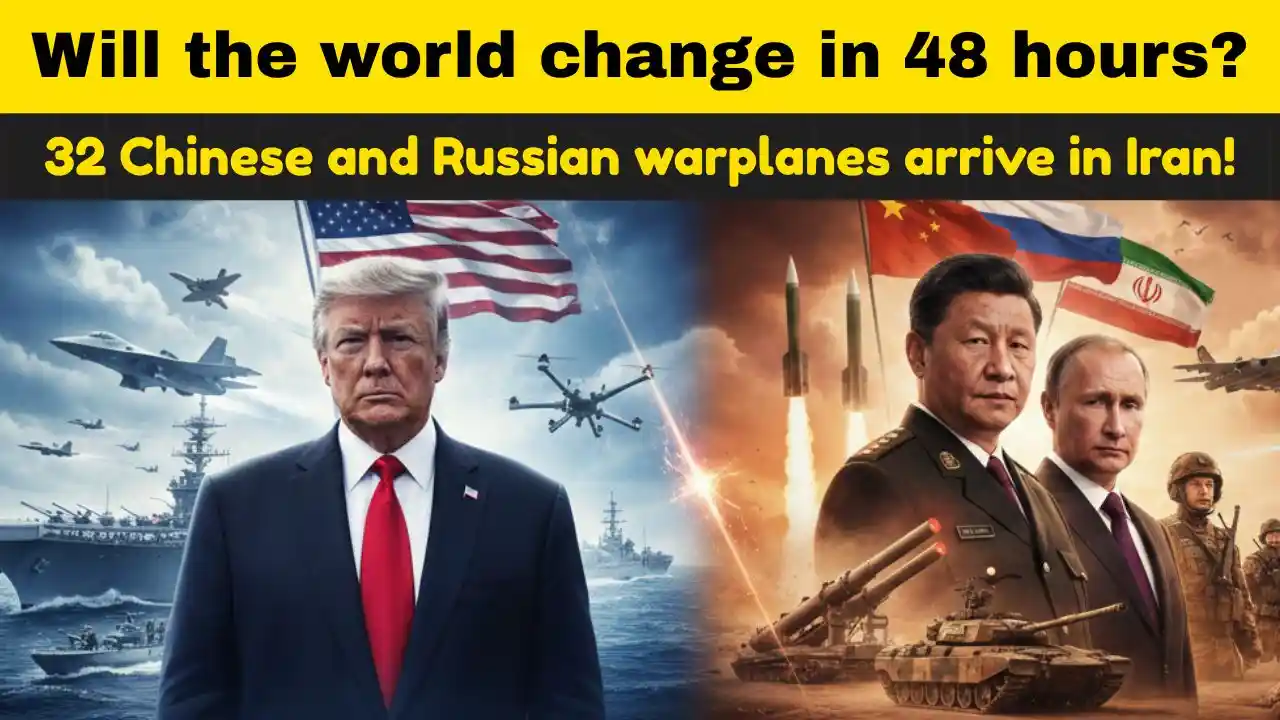
The major turning point came with reports that a fleet of Chinese Air Force aircraft reached Iran in a highly secretive operation. This development reportedly alarmed even American intelligence circles. The situation now raises a critical question: is the United States becoming increasingly isolated while Iran receives open or indirect support from both China and Russia?
According to international reports, this operation was conducted quietly overnight but is no longer a secret. Global media outlets have begun discussing it openly. Within the last 48 hours, an extremely confidential operation by the People’s Liberation Army has reportedly come to light. Satellite imagery is said to confirm that 16 Chinese military transport and combat aircraft arrived at Iran’s Hamadan Air Base.
Security analysts emphasize that military transport aircraft do not typically carry food, beverages, or medical supplies. Current assessments suggest that China may have delivered HQ-9B advanced air defense systems along with electronic warfare equipment capable of countering drones. The strategic purpose of this move is believed to be the prevention of potential airstrikes by the United States or Israel on Iranian nuclear facilities.
At the same time, Iran’s Supreme Leader Ayatollah Ali Khamenei issued a powerful global message. He stated that although the United States has deployed one of its largest aircraft carriers, the USS Abraham Lincoln, near the region, Iran has no intention of initiating an attack. However, he warned that if Iran is attacked, the response would be so severe that no force would be able to stop it. The unspoken message was clear: Iran will not strike first, but retaliation would be decisive and uncontrollable.
Khamenei further indicated that any attack on Iran would not remain a bilateral conflict but would turn into a regional war. He subtly signaled that China and Russia are prepared to support Iran, and that any assault would trigger attacks on allied interests across the region. Analysts believe this statement was deliberately aimed at the U.S. naval presence in the Persian Gulf and Israel’s war readiness.
Iran’s strength does not rely solely on missiles. Its geographical advantage, particularly control over the Strait of Hormuz, is one of its most powerful strategic weapons. Approximately 20 percent of the world’s oil supply passes through this narrow maritime route. If the strait were closed for any reason, global oil markets would face immediate shock.
Economic analysts estimate that if the Strait of Hormuz were blocked, even briefly, crude oil prices could surge rapidly. Current prices range between 60 and 70 US dollars per barrel, but a closure could push prices beyond 150 dollars per barrel. Iran’s Finance Minister has warned that if the strait were closed for just seven days, the United States and Europe could face an economic tsunami, with inflation potentially rising by 20 percent.

Iran now appears to have two strategic options. The first is its expanding missile capability. The second is its ability to disrupt global trade and energy markets by targeting critical maritime routes. When viewed on a global scale, it is becoming clear that the world is slowly dividing into two major power blocs.
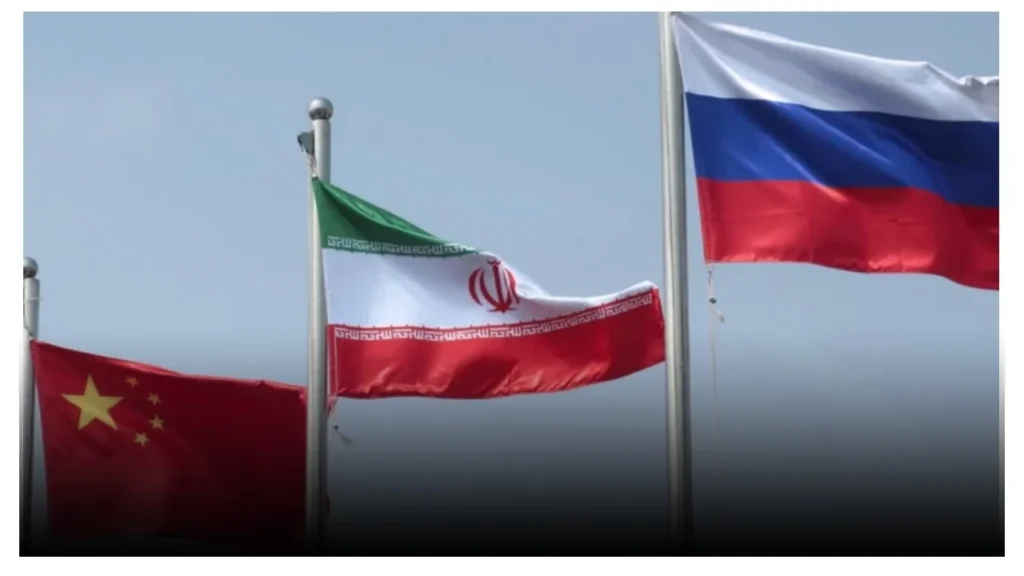
On one side, the United States is supported by Britain and Israel. On the other, Iran appears to be backed by China and Russia. Beyond this, Iran also has access to regional proxy forces. A single strike on Iran could trigger responses from Hezbollah in Lebanon, the Houthis in Yemen, and armed groups operating in Syria, potentially setting the entire Middle East ablaze.
Meanwhile, Iran has reportedly increased its uranium enrichment levels to 60 percent, prompting Western nations to accuse Tehran of reaching a nuclear flashpoint. These allegations have further intensified global concern and diplomatic pressure.
The central question facing the world now is unavoidable. Will the support of China and Russia act as a deterrent that prevents a global war, or will it become the spark that accelerates the world toward one? The answer to this question may define the future of global stability.
Essential Points
- China reportedly deployed 16 military aircraft to Iran’s Hamadan Air Base
- Advanced HQ-9B air defense systems and electronic warfare equipment are suspected
- Iran warned that any attack would trigger a regional war
- The Strait of Hormuz is a critical economic pressure point
- Oil prices could rise above 150 USD per barrel if the strait is closed
- The world is increasingly dividing into two geopolitical blocs
- Iran’s allies and proxy forces could escalate the conflict rapidly
- Nuclear enrichment concerns add another dangerous layer to the crisis
Very Brief Description
This article explains the rapidly changing global power balance as tensions rise in the Middle East, focusing on Iran, the United States, China, and Russia. It highlights China’s alleged military support to Iran, Iran’s strategic threats, the economic risk surrounding the Strait of Hormuz, and how the world appears to be dividing into opposing power blocs, increasing the risk of a wider regional or global conflict.
Pros
- Strong alliances may act as a deterrent against unilateral military attacks.
- Iran’s strategic positioning gives it non-military leverage, reducing the need for direct war.
- Global awareness of consequences may encourage diplomatic restraint.
Cons
- Increased involvement of major powers raises the risk of escalation.
- Regional proxy forces could turn a single strike into a multi-front war.
- Economic pressure points like oil supply disruptions could harm the global economy, especially ordinary citizens.
Key Examples / Takeaways
- China’s reported deployment of military aircraft signals strategic backing rather than direct war.
- The Strait of Hormuz shows how geography can be as powerful as weapons.
- Iran’s warning suggests modern conflicts may spread regionally before becoming global.
Final Message
The world is standing at a delicate crossroads where power, alliances, and economic leverage are deeply intertwined. Whether this moment becomes a turning point for peace or a path toward a wider war depends not only on military strength, but on restraint, calculation, and the choices global powers make next.