
Iran’s Underground Missile Complexes: The Hidden Military Power Beneath the Mountains
Introduction: The Concept of Underground Missile Cities
Deep beneath towering mountain ranges, extending thousands of feet underground and stretching for kilometers, lie elaborate tunnel networks that have captured global attention. These facilities are commonly referred to as missile cities, though this term can be misleading. These are not civilian settlements where people live their daily lives. Rather, they represent sophisticated military installations where ballistic missiles capable of reshaping regional politics are concealed and maintained. Some claim that even satellite technology cannot detect these hidden fortresses. Others argue that nuclear weapons cannot penetrate these underground bunkers. But how much truth lies behind these assertions? What is the real situation inside Iran’s underground missile complexes?
This article examines the actual conditions of Iran’s underground missile infrastructure, drawing upon footage released by Iranian state media and analysis from international military experts. All information presented here is based on factual reports currently documented by international media outlets.
Clarifying the Terminology: Military Complexes, Not Cities
Before proceeding further, an important clarification is necessary. Many sources refer to these facilities as underground missile cities, but this terminology is technically inaccurate. These are not cities in any conventional sense. They are properly designated as underground military complexes. No civilian population resides in these facilities. International media typically reports on these installations as underground military compounds. Security research institutions such as the International Institute for Strategic Studies have identified two primary reasons why Iran has invested heavily in developing these tunnel systems.
The first reason is protecting their missile systems from sudden aerial attacks. By placing critical military assets deep underground, Iran can shield them from initial strikes that might otherwise cripple their retaliatory capabilities. The second reason is making it difficult for adversaries to study, track, and target their missile transportation and preparation activities. The complexity and secrecy of these underground networks create significant challenges for enemy intelligence gathering.

Strategic Reasons Behind Underground Construction
According to Iranian authorities, these complexes are typically located at depths of approximately 500 meters, which translates to roughly 1,600 feet below the surface. At such depths, massive mountain ranges provide natural protection for these underground missile installations. The geological advantage of mountains cannot be overstated. They offer multiple layers of rock and earth that act as shields against conventional weapons, making direct targeting extremely difficult.
Depth and Location: Natural Mountain Protection
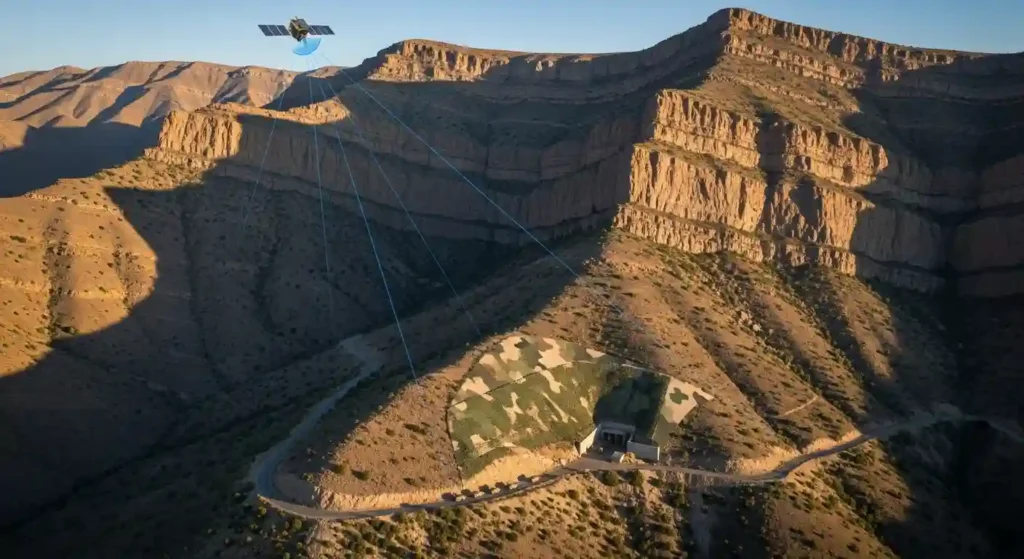
Many people assume that these underground missile complexes are completely isolated from the outside world and impossible to detect. However, this assumption does not reflect current technological realities. Modern technology has advanced considerably, and American and Western intelligence services have indeed identified many of these locations using satellite technology. This is how information about these facilities reaches international media, which in turn becomes the basis for public knowledge and analysis.
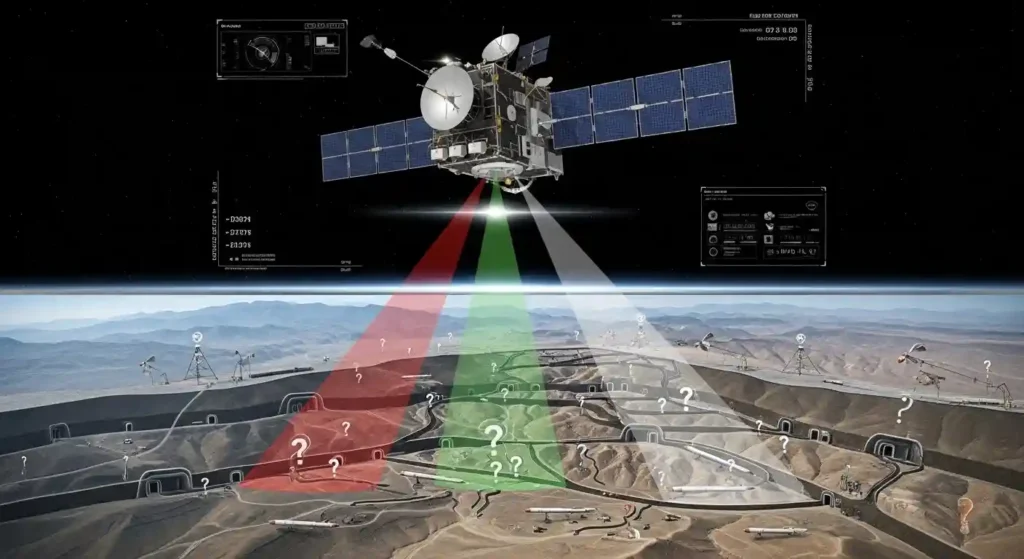
Satellite imagery can reveal tunnel entrances at the base of mountains, ventilation systems, newly constructed infrastructure, and materials being transported into these mountain facilities. All of these activities can be monitored and analyzed. However, there is a crucial limitation to this surveillance capability. While satellites can detect external features and surface activities, they cannot penetrate deep into the tunnel networks to reveal what happens inside, how the tunnels branch out, or what moves through them. Current satellite and imaging technology lacks the capability to see through solid rock and earth.
Satellite Detection Capabilities and Limitations
Therefore, critical questions remain unanswered with complete certainty. Where exactly are the missiles stored? How many missiles are stockpiled? What is the precise layout of the internal tunnel system? At present, no external power can answer these questions with 100% accuracy. This element of uncertainty, this inherent ambiguity, represents a significant strategic advantage for Iran, according to many military analysts.
Inside the Complexes: What We Know
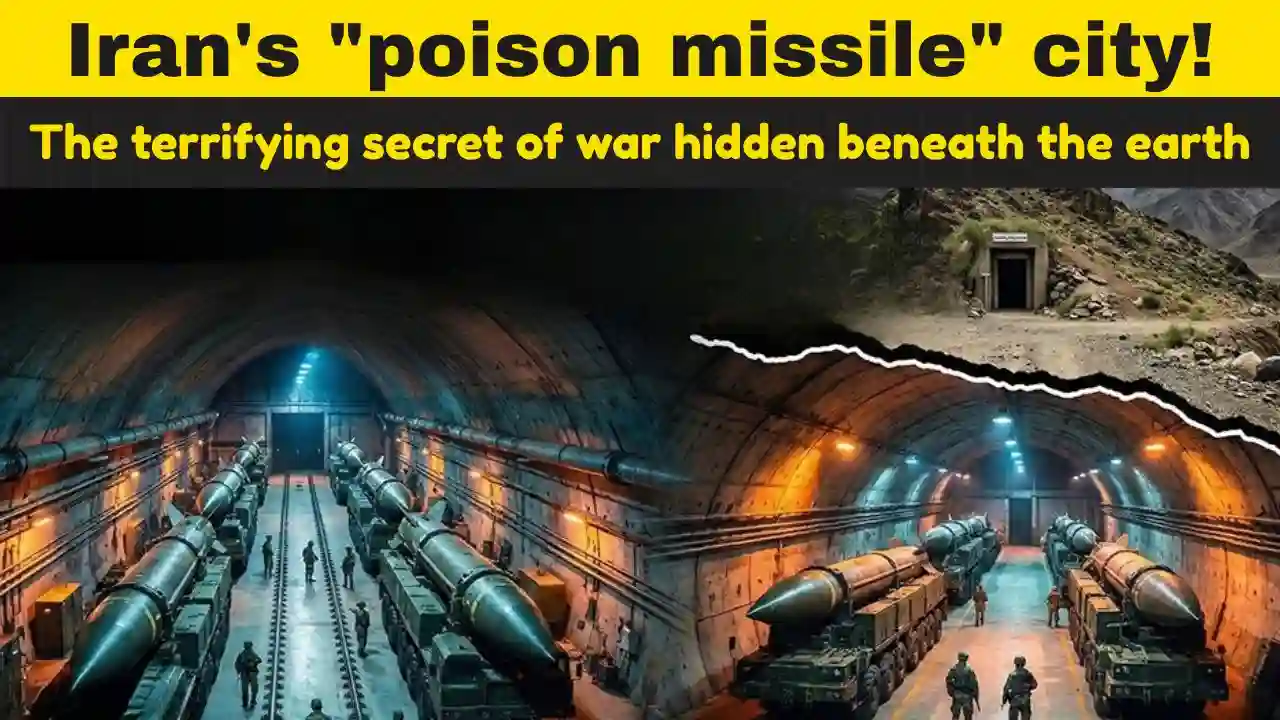
From 2015 to the present, video footage released by Iranian defense forces has provided some insight into what exists inside these facilities. In the footage that authorities have made public, ballistic missiles such as the Qiam and Sejil series can be seen lined up in formation within the tunnels. These videos offer glimpses of the scale and organization of Iran’s underground missile arsenal.
Automated Rail Systems for Rapid Deployment
The most distinctive feature visible in this footage is the automated rail system. This sophisticated transportation network allows missiles to be moved efficiently throughout the complex. Iranian media emphasizes that when the order is given to launch missiles, they possess the capability to fire multiple missiles in rapid succession, one after another. The rail system enables missiles stored or positioned in various locations throughout the complex to be transported very quickly to designated launch points. This capability theoretically allows for sustained, sequential launches that could overwhelm defensive systems.
The Propaganda Element: Understanding Iranian Media
However, an important consideration must be acknowledged here. These videos are selectively edited and released by Iran itself. They are classified as propaganda videos or propaganda footage. Independent analysts caution that while Iran claims to have thousands of missiles stored in these facilities, this figure cannot be verified statistically with complete confidence. Nevertheless, most independent military analysts concede that Iran likely possesses hundreds of missiles, even if the claimed thousands cannot be confirmed. The actual numbers remain subject to debate and estimation rather than precise verification.
Can These Complexes Be Destroyed?
A question that concerns many observers is whether these underground military installations can be destroyed. Some sources claim they are indestructible, but military analysts characterize such claims as exaggerations. There is a valid reason for this assessment. While these underground tunnel complexes can indeed withstand conventional aerial attacks, modern technology has evolved significantly.
Modern Weapons and Bunker-Busting Technology
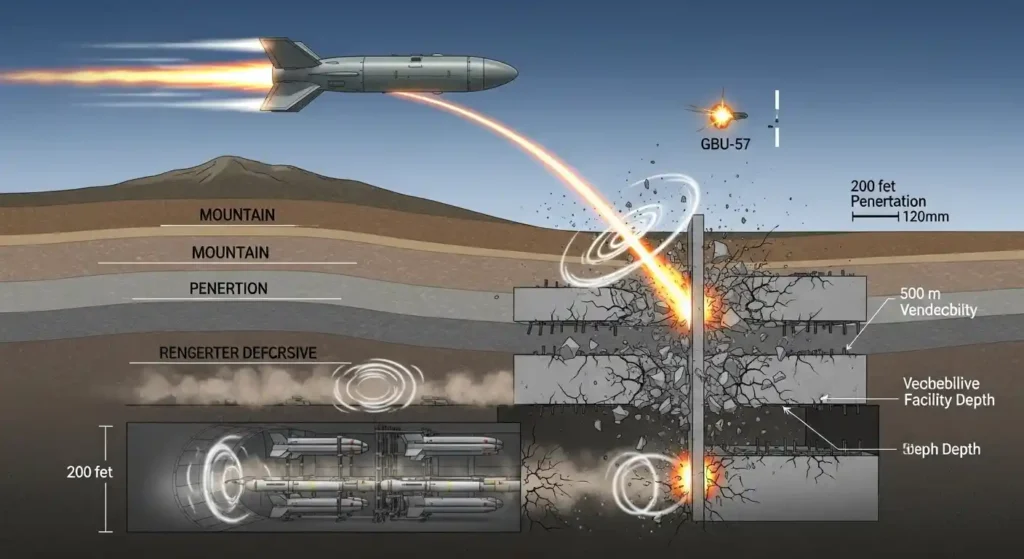
Bunker-buster bombs represent a specific category of weapons designed to penetrate fortified underground structures. For example, the United States possesses the GBU-57 bomb, which has the capability to penetrate through five layers of concrete and reach depths of approximately 200 feet. Therefore, regardless of how deep these tunnel networks extend, if precision strikes are delivered to tunnel entrances, ventilation access points, and other critical infrastructure, it becomes possible to trap personnel inside the underground facilities, preventing them from exiting. Alternatively, with modern advanced weaponry, there exists the capability to completely destroy these installations, according to military analysts.

The notion that these complexes are completely indestructible is currently regarded as an exaggeration by international media. The reality is more nuanced. While they are heavily fortified and difficult to attack, they are not invulnerable to all forms of military action.
Strategic Purpose: Deterrence Through Hidden Strength
In summary, Iran’s underground missile installations represent the largest and most secure underground missile complexes currently known in the world. While they are not completely invisible or entirely indestructible, destroying them would require significant military resources and sophisticated weaponry, making any attack a complex and costly undertaking.
Why does Iran maintain such elaborate underground facilities? The prevailing interpretation is deterrence based on the principle of mutual assured retaliation. If attacked, Iran wants to ensure it retains the capability to strike back. The existence of these hidden, protected missile arsenals serves to deter potential adversaries by demonstrating that Iran’s retaliatory capabilities cannot be easily eliminated in a first strike. Creating fear in potential enemies through the demonstration of hidden strength appears to be a primary purpose of maintaining these underground missile installations.
Conclusion: The Future of Underground Military Strategy
These underground missile complexes, built with concrete-reinforced walls dozens of feet beneath the earth’s surface, may become a decisive factor in determining political power dynamics in the Middle East in the future. The ongoing tension between advancing detection and targeting technology on one side, and increasingly sophisticated defensive and concealment strategies on the other, represents a fundamental challenge in modern military planning.
The strategic value of these installations lies not just in their physical protection of military assets, but in the uncertainty they create for potential adversaries. Without complete knowledge of missile locations, quantities, and deployment capabilities, any military planner must account for significant unknowns when considering action against Iran. This strategic ambiguity, combined with genuine physical protection, makes Iran’s underground missile network a formidable element of its defense posture.
Whether Iran’s underground strategic approach will prove successful in the long term remains an open question, dependent on evolving technology, shifting geopolitical alliances, and the broader trajectory of Middle Eastern politics. What is certain is that these facilities represent a significant investment in a military strategy designed to ensure survival and maintain deterrence in a volatile region.