
Growing Coleus from Seeds
Introduction to Coleus
Coleus, sometimes called “painted nettle,” is a plant native to Asia and Africa. Thanks to its unpretentious nature, easy growth from seeds at home, and the absence of complicated care requirements, it has truly become a favorite among plant lovers. It is widely used for both outdoor landscaping and indoor decoration. This plant combines simplicity with beauty, making it suitable even for beginners.
What Makes Coleus Attractive?
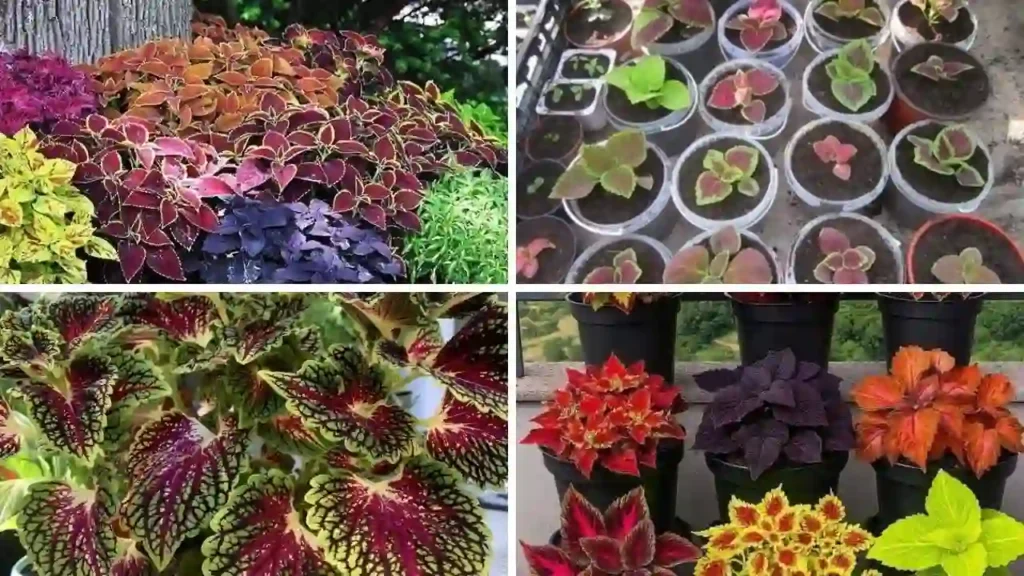
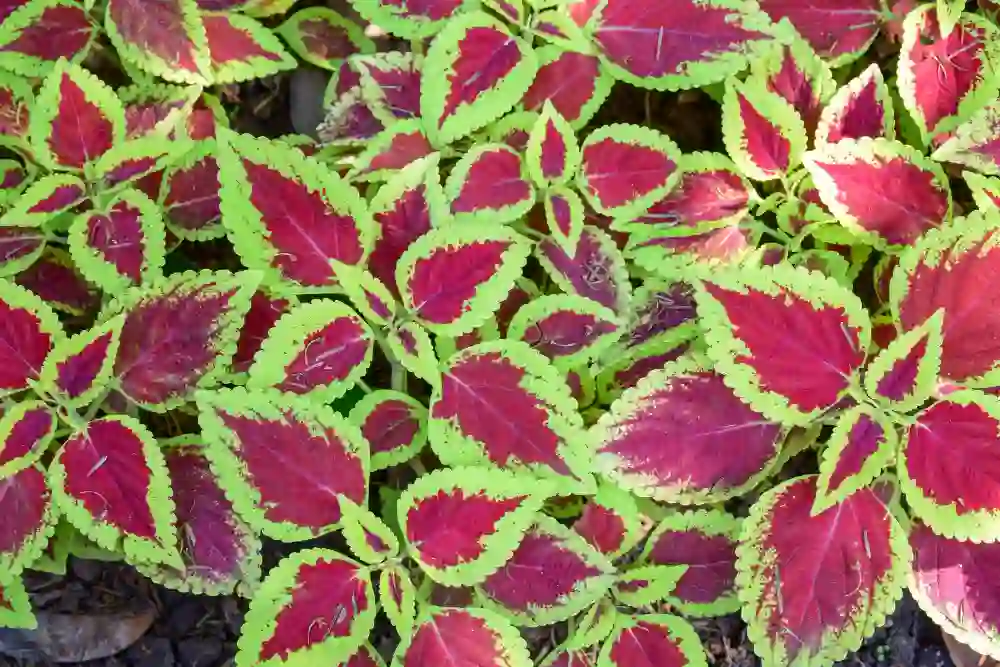
The main charm of coleus lies in its decorative foliage. This herbaceous plant grows between 30 and 50 cm in height and is admired not for its flowers, but for its incredibly colorful leaves. The pointed, oval-shaped leaves sit on soft, slightly hairy stems and display astonishing shades.
It is not unusual to see not only green or yellowish-white tones, but also exotic colors such as lilac, crimson, brown, purple, and pink. Many varieties are decorated with spots, stripes, or wide and narrow borders along the edges. Even flowering plants might envy the richness of its leaf colors. With minimal care, coleus remains bright, lively, and pleasing both indoors and outdoors.
Ways to Grow Coleus at Home
Coleus is as easy to propagate as it is to care for. There are two main methods of propagation:
• By cuttings
• By seeds
Because the stems do not branch actively on their own, pruning and pinching are necessary to achieve a dense, compact crown with many shoots.
Growing Coleus from Cuttings
Top cuttings with several leaves, taken from mature plants, are perfect for propagation. Young shoots cut in spring root easily either in water or in a light, moist mixture of sand and sphagnum. Roots usually appear within a week, after which the young plants are ready to be planted into separate pots.
If you have several young coleus plants of different colors, you can create a decorative composition by planting them 10–15 cm apart in one large container. As they grow, pinch them regularly to encourage bushiness and help them form a beautiful rounded shape. This method allows you to decorate your home, veranda, garden, or flower bed with a vibrant, multicolored display of lush foliage.
Growing Coleus from Seeds
Growing coleus from seeds is simple and very rewarding. Whether the seeds are collected independently or purchased, they usually have a high germination rate, and young seedlings develop well.
However, when growing from seeds at home, several factors must be considered.
Coleus is light-loving and thrives in stable warmth. For strong and healthy seedlings, sowing is best done in early spring, when daylight hours begin to increase. This prevents seedlings from becoming weak and stretched due to lack of sunlight and ensures faster development compared to autumn or winter sowing.
Spring sowing also reduces labor, as natural warmth eliminates the need for additional greenhouse conditions or artificial lighting.
For sowing, shallow containers with drainage holes are required. Use a light, loose, nutrient-rich substrate, such as a mixture of humus, sand, peat, and crushed sphagnum. Fill the container without compacting the soil too tightly, leaving about 1.5–2 cm from the soil surface to the edge of the container.
Sowing process:
• The seeds are very small, so they are not buried in the soil but evenly distributed over the surface.
• The surface is carefully moistened using a spray bottle to avoid washing the seeds deeper or causing them to cluster.
• The container is placed under film or in a small greenhouse environment.
After sowing, the seeds need warmth and light. Place the container on a bright windowsill or provide artificial lighting. The optimal temperature is 22–24 °C. Germination usually takes about two weeks. Until sprouts appear, air the container daily and moisten the substrate if necessary.
Growing in Peat Tablets
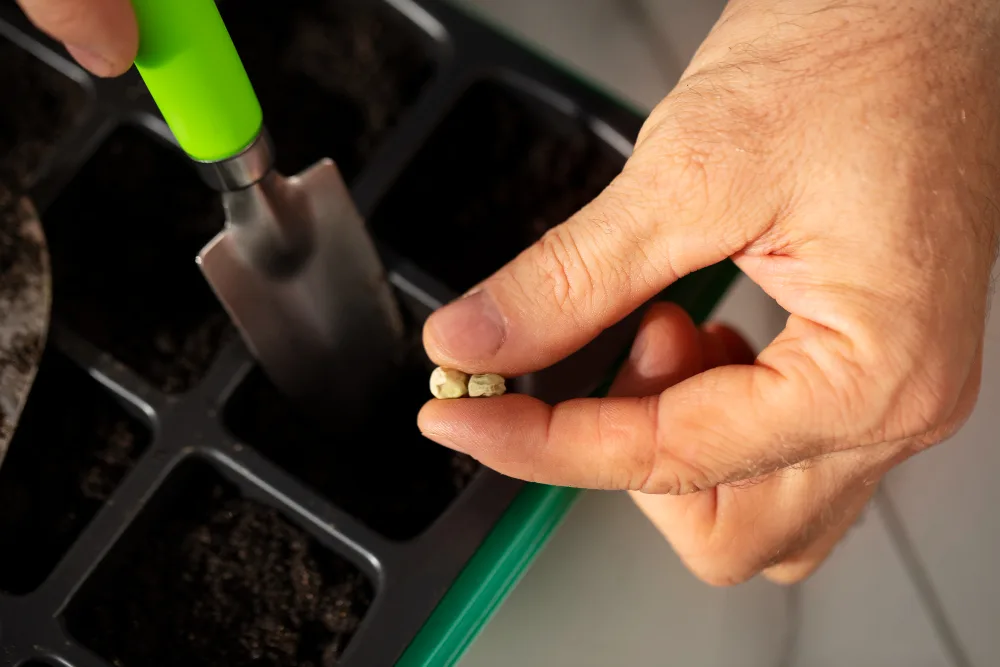
Peat tablets can also be successfully used for growing coleus from seeds at home.
Before sowing, the tablets are thoroughly watered so that the compressed peat swells and increases several times in size. Excess liquid is removed. The seeds are carefully placed on the surface at a small distance from each other and lightly pressed into the elastic substrate. The tablets are placed in a tray under film and transferred to a warm, bright place.
When using peat tablets, it is important to avoid both drying out and overwatering. Moisture can be added by lightly spraying the surface or by adding a small amount of water to the tray every three to four days.
Caring for Seedlings
Once the seedlings appear, they should be ventilated more frequently. This helps them adapt quickly to the external environment.
The first leaves are green, but as true leaves form, they gradually acquire the characteristic colors of the selected variety. When the plant crowns begin to touch and seedlings interfere with each other, they are pricked out and spaced at least 2 cm apart.
If seedlings were grown in peat tablets, it is better to cut the surface layer before planting them into soil so that roots can develop freely in all directions.
After 1.5 to 2 months from sowing, plants will have several true leaves, fully colored according to their variety, and will reach 10–15 cm in height. At this stage, they can be transplanted into separate pots, where they will continue growing permanently.
Ongoing Care for Mature Plants
For healthy development, indoor coleus requires:
• Bright, diffused light
• Air temperature of 18–25 °C in summer and not lower than 15 °C in winter
• Abundant watering and regular feeding in summer, which stops with the onset of winter
To form a lush crown, regular pinching and pruning of shoots are essential. With proper shaping, within a few years it is possible to grow spectacular standard tree forms with bright, unusual foliage.
Coleus is a plant that combines simplicity with stunning decorative beauty. Whether grown from cuttings or seeds, it rewards even minimal care with vibrant colors and elegant forms, making it a true highlight of any home or garden space.